— let's grab a coffee —
№ 08 · 92107 · INDIE Beach LIFE
A walkable, indie beach town where surf culture, local shops, and the locals are unapologetically authentic.
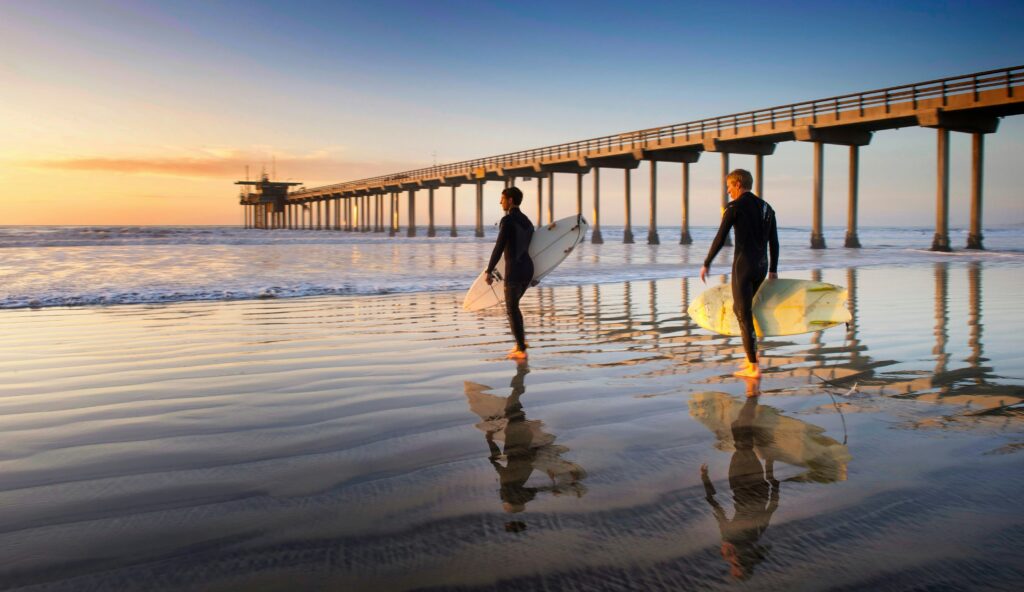
Ocean Beach is the Point Loma peninsula’s most energetic and eclectic coastal neighborhood, known for its surf breaks, Newport Avenue shops, antique stores, dog beach, pier, farmers market, and proudly independent culture. It has a large public beach, and hosts a variety of street and music festivals that draw crowds from near and far. If you are looking for nightlife, this is the place to find younger vibe, live music and a variety of bars, restaurants, cuisine and rooftop decks for ocean views.
The soul of OB is informal, creative, and community-protective. People move here because they want walkability, beach access, character homes, and a neighborhood that still resists feeling overly polished.
ZIP
92107
Median price
~$1.2M – $1.8M
Homes
~4,000–6,000
Walk Score
79
Schools
St. Peter’s · OB Elementary · Dana + Correia · Point Loma High School · Warren Walker
parks
~135 acres of parks + rec excluding natural shoreline parks and open space.
Best for
Beach lovers, surfers, skaters, locally owned businesses + an indie food-music-shopping scene.
History
Founded late 1880’s, then revitalized in 1907.
The neighborhood runs along Newport Avenue, bordered by San Diego River / Mission Bay edge to the north, Sunset Cliffs edge / Adair Street area to the south, Point Loma Heights / Nimitz Boulevard edge to the east, and Pacific Ocean to the west.
North OB: Dog Beach, Robb Field, and river/park influence.
Central OB: Newport Avenue, pier area, shops, restaurants, and highest activity.
South OB: Quieter residential streets approaching Sunset Cliffs.
Adjacent: Sunset Cliffs, Point Loma Highlands, Midway, Mission Beach across the river.
Ocean Beach began its transformation from a sparsely developed coastal area into a true San Diego community in the early 1900s, when developers brought in streets, utilities, and a streetcar line that connected OB to the rest of the city. The neighborhood’s resort era arrived in 1913 with the opening of Wonderland Park, built by developer Willson Chamberlain and his Ocean Beach partners at the foot of Voltaire Street. San Diego’s first large amusement park, Wonderland covered eight acres and featured a massive roller coaster, casino and dance pavilion, restaurant, zoo, water slide, and more than 40 attractions. An estimated 35,000 people reportedly visited on opening day.
Wonderland was short-lived. A major flood in 1916 severely damaged the roller coaster, and the park closed soon afterward. But Ocean Beach continued to evolve. By the late 1920s, the neighborhood was transitioning from a weekend resort into a year-round residential community, with homes, small apartment complexes and communal cottage communities, locally owned businesses, theaters, churches, and the growing surf culture that would eventually become part of OB’s identity.
World War II brought another major wave of growth, as military personnel, wartime workers, returning GIs, and their families helped double Ocean Beach’s population between 1940 and 1950. It was an affordable seaside community. As San Diego university populations and popularity grew such as San Diego State, University of San Diego and UCSD, Ocean Beach became and still remains a hot spot for housing and college entertainment – not only for daytime beach and surf, but night time bars, restaurants, and live music.
Through the 20th century, OB became known for surf culture, independent businesses, countercultural identity, and strong local resistance to overdevelopment — traits that continue to define it today.

Main commercial spine with restaurants, bars, shops, and weekly market energy.
Local north-south connector with beach-town businesses and residential access.
Residential and commercial mix with strong OB character.
Central blocks close to the pier and neighborhood activity. Known for its locals’ beach where the street meets the Pacific Ocean.
Beach-adjacent residential street with homes on the hillside, but still near walkable amenities.
Runs north-south and main road to access Ocean Beach from the 8 Freeway. It is home to restaurants, retail and intersects all residential streets from OB to the southern neighborhood of Sunset Cliffs.
HOA / design rules: No broad HOA; coastal development rules and neighborhood sensitivity to scale are important.
OB has a classic coastal microclimate: cool mornings, marine layer, ocean breeze, and strong beach access. It can feel more humid and salt-air exposed than inland neighborhoods due to the marine layer.
Walkability is one of its biggest strengths. Many residents walk to coffee, groceries, restaurants, the beach, the farmers market, and parks. Parking is the tradeoff, especially near Newport, the pier, Dog Beach, and summer/weekend beach traffic.
The social character is casual, independent, and highly local. It is vibrant and sometimes noisy, but that energy is exactly why many residents love it.
Snapshot date: May 2026 public-market estimate. Refresh with MLS before publishing.
| Home type | Typical sq ft | Price range | What you get |
|---|---|---|---|
| Condo / small cottage | 600–1,100 | $650K–$1.1M | Entry point, walkability, smaller footprint. |
| 2BR/3BR beach cottage | 900–1,500 | $1.1M–$1.7M | Character home, limited parking, beach-town feel. |
| Renovated 3BR/4BR | 1,600–2,500 | $1.7M–$2.8M | Updated interiors, better layout, stronger location. |
| Top tier view / multi-unit / new | 2,500+ | $2.8M+ | Ocean proximity, income potential, rare larger property. |
| Schools | Notes |
|---|---|
| Elementary | Ocean Beach Elementary (TK – 4th) | Rank: 9/10 |
| Middle | Dana Middle (5th-6th) | Rank: 8/10 Correia Middle (7th-8th) | Rank 6/10 |
| High | Point Loma High School (9-12) | Rank: 9/10 |
| Private / charter | High Tech Elementary, Middle + High schools at Liberty Station, The Rock Academy, Warren-Walker, St. Charles. |
“OB is not trying to be perfect — that’s the point. It’s walkable, local, and completely itself.”
Allison McCurdy
Thinking about Ocean Beach? Send Mike a note. He’ll tell you which blocks are quietly coming up, which homes have details you’d never spot from a photo, and which streets you’d be paying a premium for. There’s a difference.